Data complexity doesn't plateau.
Your transformation layer needs to grow with it.
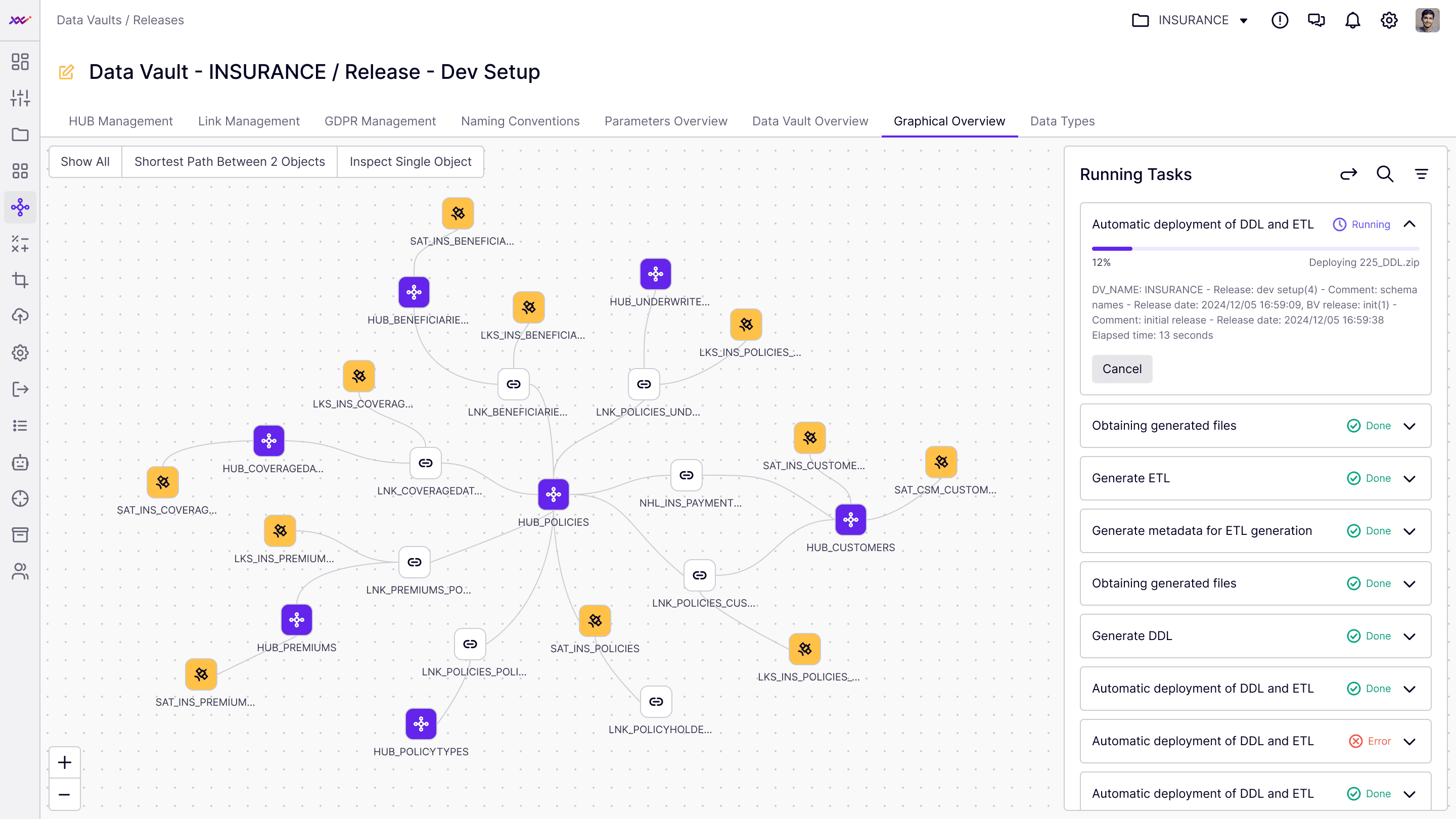
VaultSpeed is the platform that gives insurance data teams that leverage — at any stage of the journey.
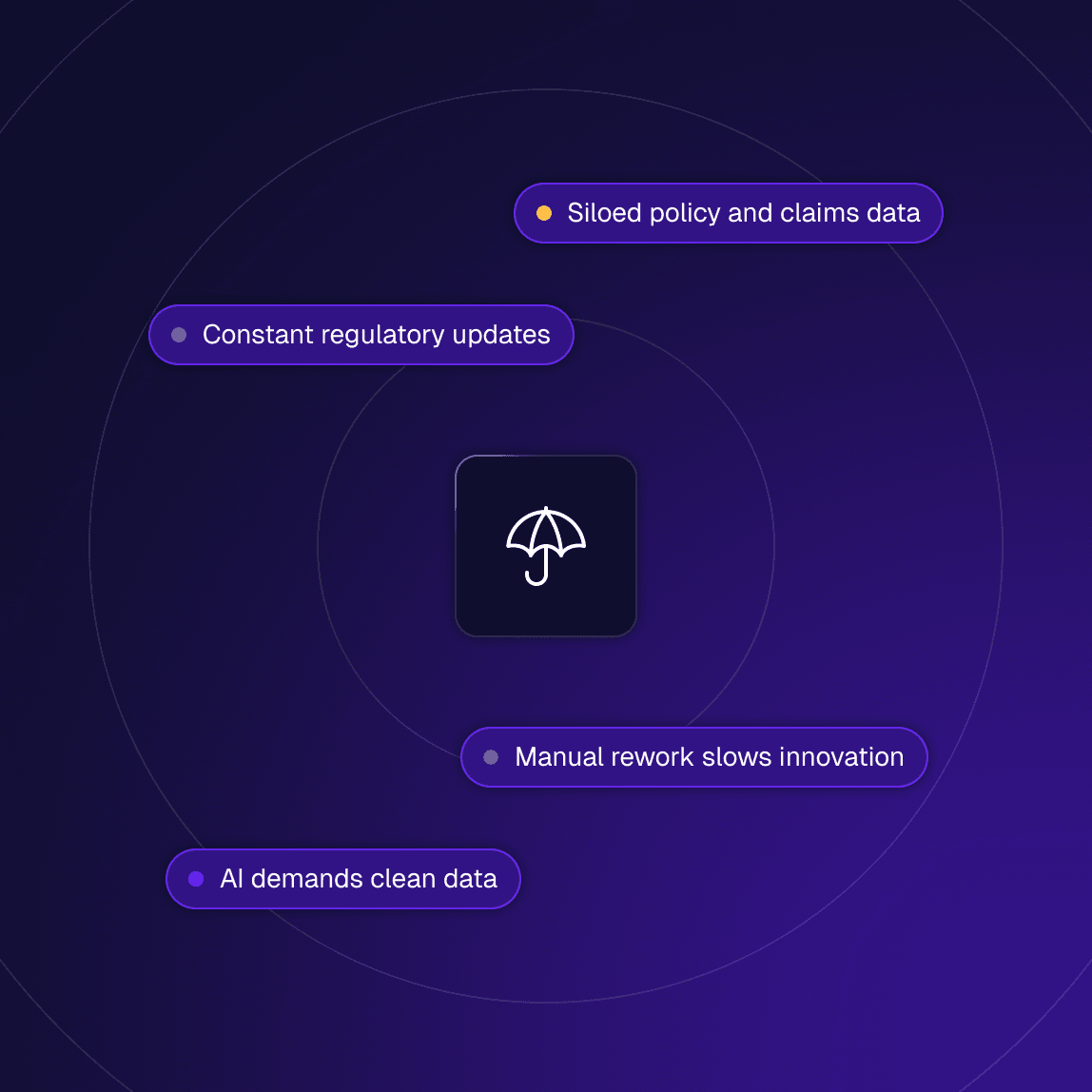
Insurance data is structurally hard. The question is where that complexity finds you.
Just starting
Manual Data Vault is slower than it looks at first
The first source system takes weeks of hand-coding. The third takes longer, not shorter — because every source adds another layer of dependency, exception handling, and business logic to keep consistent. By the time you reach production with ten sources, you're maintaining a code base that no single person fully understands.
Experimenting / POC
POC success doesn't tell you what happens at scale
Your proof of concept works. But what happens when you go from 3 source systems to 17, or from 50 tables to 2,000. Most POCs aren't test for what happens when policy schemas change mid-project, regulatory requirements add new lineage requirements, or the engineer who designed the patterns moves to a different role.
Already Automated
Your framework is becoming its own maintenance job
You automated the right things. But those frameworks accumulate their own debt — transformation debt. Business logic ends up in scripts only one person understands. The framework drifts from the documentation. When that person leaves, the framework becomes a black box.
The model generates the code. Not the other way round.
Code-driven with manual SQL , templates, dbt generators
Logic lives in the code. Templates fork. Forks drift. Each change requires manual edits across potentially hundreds of scripts. The person who wrote it is the documentation. Lineage is reconstructed after the fact, not embedded by construction.
Model-driven with VaultSpeed
Logic lives in the model. Code is a derived artifact. Changes propagate through regeneration, not manual edits. Lineage is deterministic — derived from the model, not parsed from code. Any engineer can read the model. No one needs to know who wrote the original SQL.
Built for Insurance scale
Source complexity handled systematically
Guidewire, Duck Creek, SAP, Salesforce, legacy databases — metadata in, transformation logic out. New sources onboard in days.
Schema drift absorbed without manual rework
Source schemas change. VaultSpeed detects it, regenerates logic through the model. No pipeline repair sprints.
Regulatory lineage built in by design
Lineage derived from the model, not reconstructed from code. When regulators ask, it already exists.
Business Vault for actuarial and reporting
PIT tables, Bridges, calculated satellites — generated, not hand-coded. Same patterns powering pricing, commissions, and claims.
Runtime-free deployment, no lock-in
Generated SQL or dbt runs natively in your cloud platform. No runtime dependency. Your code, always.
Outcomes Insurance teams can measure
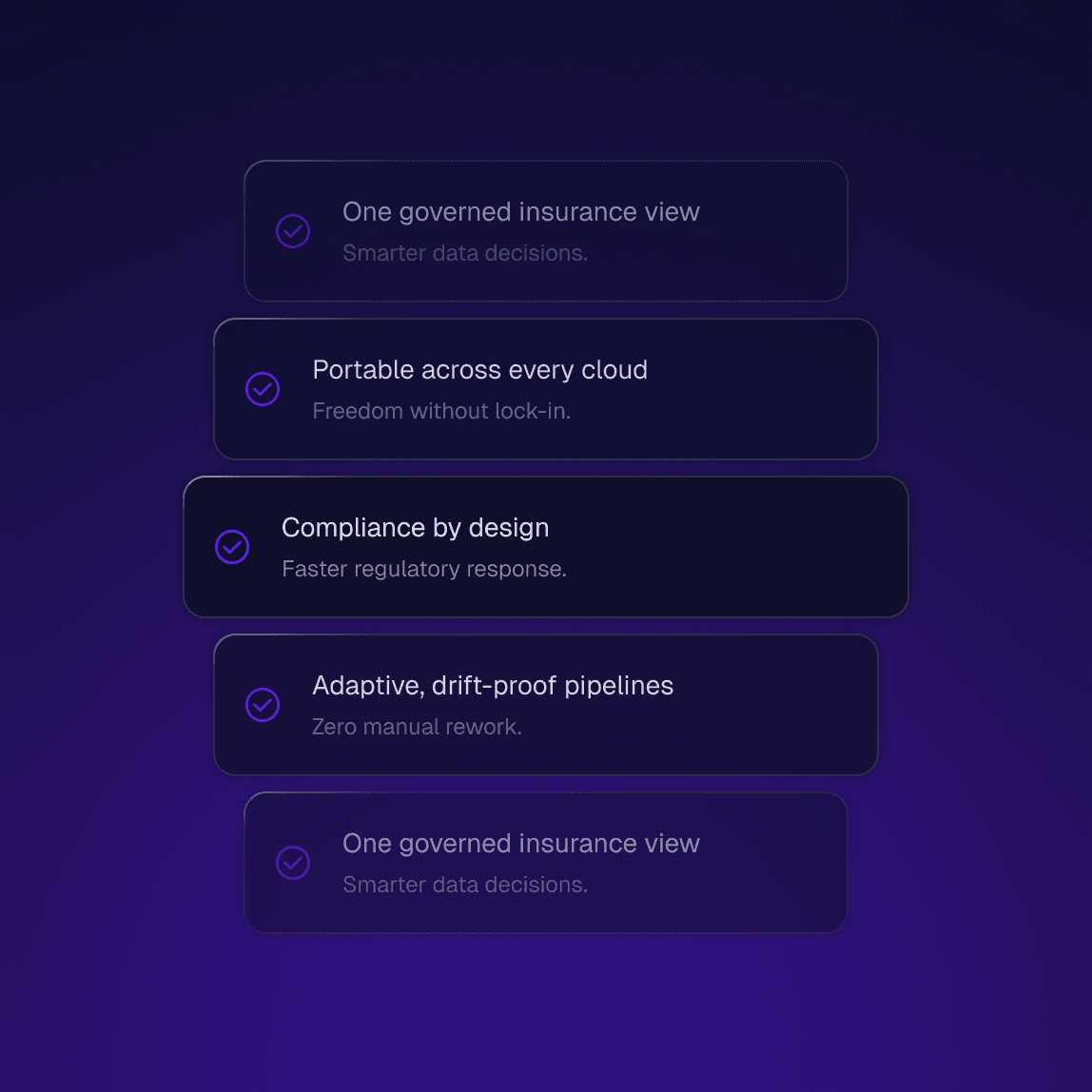
Key-person risk removed.
The engineer leaves. The model stays. Anyone can read it, extend it, reason about it.
Regulatory reporting without the scramble.
Audit-ready lineage for IFRS 17, Solvency II, ESG — generated automatically, not assembled manually.
Actuarial analytics that keeps up.
PIT structures and Business Vault automation give actuaries consistent, governed data for pricing and exposure.
Commission reporting that doesn't break.
Profit-sharing logic codified in governed templates, not spreadsheets or tribal knowledge.
Migration as regeneration.
Teradata, Oracle, on-prem to Snowflake, Databricks, Fabric? The model stays. Only the target changes.

The same team, delivering more — faster, reliably, at scale.
30+
source systems unified into a single governed vault at HDI AG
900+
DV objects in production at HDI AG — a team of 5, serving 4,000+ daily Power BI users across 30 source systems
17
active data sources migrated from on-prem Oracle to Azure at NN Non-Life — without expanding the team
24h → 1–2h
PIT load times at NN Non-Life after automation — 94% reduction
37
source systems standardized across 6,600+ objects at a major US insurer
< 2 sprints
typical delivery time for new data products, across insurance customers